
Shotgun Ammo Explained Simply: Picking the Right Shell for Hunting, Sport, and Home Defense
What makes shotgun ammunition so uniquely versatile among firearm cartridges? At its core, shotgun ammo consists of a shell housing shot pellets, a slug, or specialized projectiles propelled by gunpowder within a metallic or plastic case. The payload spreads upon leaving the barrel, delivering a broad pattern that simplifies hitting moving targets at close to medium range. To use it effectively, one must match the shot size and shell length to the specific game or target, ensuring the correct choke and payload combination for optimal performance.
Understanding the Basics: What Types of Shells Are Out There?
When you’re sorting through shotgun ammo, you first need to understand that “shell” means the whole cartridge, not just the projectile. The main split comes down to **shot size, payload, and case length**—these decide what the gun actually does. For birdshot, you get tiny pellets that pattern wide, perfect for moving targets but weak on tough hide. Buckshot packs larger lead balls (like 00 or #4) for serious stopping power at close ranges, while a slug is one solid hunk of lead for precision out to 100+ yards. Also, watch shell length: 2¾-inch fits most field guns, but 3-inch and 3½-inch magnums hold more powder and shot, giving harder hits with more recoil.
Always match the shell’s length and shot type to your https://specialtysportsandsupplyltd.com/ barrel’s choke and your target—using a slug through a tight choke can ruin the barrel.
Start with standard 2¾-inch birdshot to learn feel, then step up based on what you’re hunting or protecting.
Buckshot vs. Birdshot vs. Slugs: Which Payload Fits Your Need?
Choosing between **buckshot vs. birdshot vs. slugs** hinges entirely on your target and range. Birdshot, with its tiny pellets, delivers dense patterns ideal for fast-moving birds and clay targets, but it lacks the penetration for tough-skinned game. Buckshot fires large lead balls, granting serious stopping power for deer or home defense at close to medium ranges, yet its spread demands careful shot placement. Slugs are single, heavy projectiles offering maximum energy and precise accuracy out to longer distances, perfect for large game like bear or elk. Match the payload to the mission: birdshot for feathered game, buckshot for two-legged threats or brush, and slugs for open-country hunting. Matching payload to purpose prevents over-penetration risks and ensures a clean, ethical harvest.
Ultimately, birdshot patterns wide for small game, buckshot balances spread and power for defense, and slugs deliver focused, deep-penetrating force for large targets—so pick based on range and intended quarry.
Understanding Gauge Sizes: 12, 20, and .410 Explained Simply
Gauge sizes tell you the bore diameter, and it’s simpler than it sounds: a 12-gauge is the heaviest and most versatile, handling everything from upland birds to waterfowl with authority, while the 20-gauge offers the same shotshell length in a lighter, slimmer frame—perfect for smaller shooters or long walks. The .410 isn’t a gauge at all but a caliber, and it kicks less but throws a much smaller payload, making it ideal for beginners on clays or small game at close range. The key trade-off between these three is always recoil versus shot payload, so match the gun to your job and your tolerance.
Remember: 12-gauge power, 20-gauge balance, .410 precision—choose by your target and your shoulder.
Shell Length and Power: What Do 2¾, 3, and 3½ Inch Rounds Mean?
The number on a shotshell box—2¾, 3, or 3½ inches—refers to the hull’s length before firing, which directly dictates shell length and power capacity. A 2¾-inch round is the standard, balancing manageable recoil with enough payload for most birds and clays. A 3-inch shell holds more shot and powder, delivering noticeably harder hits at longer ranges, ideal for geese or turkey. The 3½-inch magnum is the heaviest-hitting option, reserved for big waterfowl and large game, but it demands a stout, dedicated action and amplifies recoil significantly. Critically, a 3-inch chamber can fire 2¾-inch rounds, but a 2¾-inch chamber cannot safely fire longer shells.
Q: Which shell length should I choose for all-around use? Choose 2¾-inch for versatility and lighter recoil; step up to 3-inch only when you need extra power for tough, distant targets.
How to Choose the Right Load for Your Specific Activity
Match the shot size and payload to what you’re actually breaking or hitting. For clays, a lighter 1-ounce load of #7.5 or #8 shot at 1,200 fps cycles smoothly and saves your shoulder over a long round. Upland birds need denser #6 or #7.5 with a bit more oomph so feathers don’t soak the energy, while waterfowl demands steel #2 or #3 in 3-inch shells for lethal range. Turkeys are a different beast—use a tight-patterning 3.5-inch magnum with #5 or #6 copper-plated shot. Slugs? Only for deer or big game, and a rifled slug from a smoothbore is fine inside 75 yards. Your gun’s chamber length also matters—don’t cram a 3.5-inch shell into a 3-inch chamber, ever. Q: How do I know if a load is too heavy for my activity? A: If you’re flinching, missing targets, or the gun kicks like a mule, drop to a lighter payload—accuracy always beats brute force.
Selecting the Perfect Shell for Home Defense: Stopping Power vs. Over-Penetration
For home defense, your shell choice is a calculated trade-off between immediate incapacitation and the safety of everyone behind the target. Selecting the perfect shell for home defense demands prioritizing controlled penetration. While a 00-buck load offers formidable stopping power, it can easily tear through interior walls, risking innocent lives. The smarter play is a #4 buckshot load, which typically penetrates 12–16 inches of ballistic gel—enough to reach vital organs—while losing energy faster in drywall, reducing over-penetration risk. Follow this sequence: first, pattern test your chosen load at 10–15 feet to confirm a tight spread; second, verify it cycles reliably in your shotgun; third, train with that exact ammunition to build muscle memory. Never sacrifice accuracy for raw power; a precise, moderate load beats a miss with a slug.
Hunting Applications: Matching Shot Size to Game for Clean, Ethical Harvests
For clean, ethical harvests, matching shot size to game determines penetration versus pattern density. Small upland birds like quail demand fine shot (No. 7½–8) to create dense, quick-killing patterns without excessive meat damage. Pheasants and rabbits require medium shot (No. 5–6) for adequate energy at 30–40 yards, balancing pellet count with deeper tissue penetration. Waterfowl, with dense feathers, need larger steel or bismuth sizes (No. 2–3) to break wing bones and reach vital organs at longer ranges. Selecting using this sequence:
- Identify the game’s body mass and feather/hide resistance
- Choose a shot size that delivers at least 3–4 pellets in the vital zone
- Verify pattern density at your typical shot distance before hunting
Oversized shot can wound with sparse patterns; undersized shot fails on heavy game.
Target Shooting and Sport Clays: Picking Lighter Recoil Options for Longer Sessions
For extended sessions of target shooting and sport clays, selecting lighter recoil options directly impacts endurance and shot consistency. Reduced-recoil loads, often labeled as “low recoil” or “target loads,” typically use 1-ounce or 7/8-ounce shot charges at velocities around 1,200 feet per second, compared to heavier hunting loads. Light target loads mitigate shoulder fatigue and flinching, preserving swing mechanics across 100-plus bird presentations. While lighter payloads may shorten effective range, they remain fully adequate for standard 16-yard trap, skeet fields, and sporting clays stations. Test a box of each type—1145 fps versus 1200 fps—to gauge cycling reliability in semiautomatics. Choose the softest option that still breaks clays cleanly at your typical distances.

Prioritize 7/8-ounce or 1-ounce low-velocity loads to reduce cumulative recoil, maintain form, and extend session comfort without sacrificing clay-breaking performance.
Practical Tips for Handling, Storing, and Maintaining Your Supply
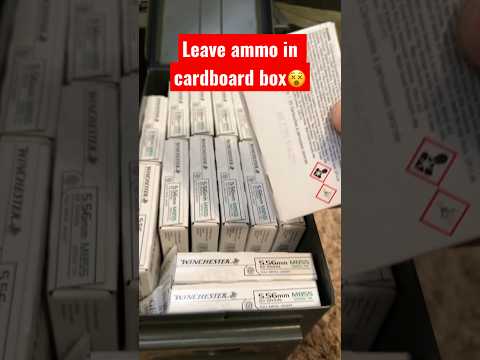
Keep shotgun shells in their original box or a hard, foam-lined case to prevent crush damage to the crimp and hull, which causes feeding failures. Store them in a cool, dry place—below 75°F with low humidity—and always avoid temperature swings that create condensation inside the primer pocket. Rotate your stock quarterly, shooting the oldest loads first to guarantee consistent performance. After handling, wipe shells with a dry cloth to remove skin oils that attract corrosion. Never oil the brass or primers; instead, lightly grease the magazine tube and chamber. For long-term storage, seal ammo in airtight ammo cans with a desiccant pack.
If a shell’s crimp feels soft or the hull shows swelling, pull it immediately—compromised rounds can chamber poorly or hang fire.
Inspect every box before a match, and keep your supply separated by shot size and dram equivalent to avoid grabbing the wrong load under pressure.
How to Read a Box of Cartridges: Decoding Velocity, Dram Equivalent, and Shot Weight
When you grab a box of shells, the printed numbers tell the whole story if you know where to 6.5x57mm Mauser Ammo for Sale look. **Velocity, measured in feet per second (fps),** shows how fast the shot leaves the barrel—faster means flatter trajectory and harder hits, but more recoil. Dram equivalent, a throwback to black powder, tells you the pressure level; a lower dram (like 2.75) is softer, while 3.25 or higher is a stout field load. Shot weight is listed in ounces (e.g., 1 oz, 1 1/8 oz), representing the payload. To decode a box quickly:
- Check the fps number first—compare it to the same gauge and shot size.
- Match the dram equivalent to your gun’s intended pressure (steel or lead).
- Weigh the shot weight against your target—lighter for birds, heavier 6.5x57R Ammo for Sale for clays or deer.
Adjust your choice so the combination suits both your shoulder and your quarry.
Proper Storage Methods to Keep Your Shells Reliable for Years
To keep shotgun shells reliable for years, control environmental exposure above all else. Store ammunition in a sealed, airtight container with desiccant packs to prevent humidity from corroding brass bases and degrading paper hulls. Maintain a consistent, cool temperature—ideally between 50°F and 70°F—because extreme heat accelerates powder breakdown and cold can cause condensation upon thawing. Keep shells elevated off concrete floors to avoid moisture wicking, and rotate your stock annually so older boxes are used first. Avoid storing loose rounds in a fabric bag, which traps dampness. Inspect shells every six months for swelling, cracks, or green verdigris on primers; discard any compromised rounds immediately. Proper storage methods transform a simple supply into a decades-long insurance policy.
- Use military-grade ammo cans with rubber gaskets and a silica gel desiccant.
- Write the purchase date on each box and practice first-in, first-out rotation.
- Store in a dark closet or basement shelf—never in an attic, garage, or near a hot water heater.
- Keep shot shells in their factory boxes to .35 Remington Ammo for Sale prevent rattling damage to crimps and primers.
Identifying and Avoiding Common Misfires or Duds in the Field
When a shell fails to ignite, keep the muzzle pointed Ammunition for Sale downrange for thirty seconds before opening the action, as hangfires can delay ignition. Rotate the dud cartridge to a different chamber position if your shotgun is a pump or semi-auto, which often resolves a light primer strike caused by headspace variance. Visually inspect each shell as you load, rejecting any with deep dents, cracked hulls, or primers that appear pierced. Field-stripping misfired shells is never safe—discard them immediately to avoid powder contamination in your bag. Moisture is the prime culprit, so store your ammunition in sealed, desiccant-lined cases.
- Cycle a fresh shell after a misfire, but never reload the same dud into .338 Lapua Ammo for Sale the magazine.
- Check primer seating depth on suspect rounds—proud primers cause feeding duds.
- Retain misfired shells in a separate pocket to track a defective lot pattern.
Comparing Performance Features: What Makes a High-Quality Round?
A high-quality shotgun round is defined by consistency in crimp, hull integrity, and payload uniformity. When comparing performance features, scrutinize shot hardness; soft lead deforms in the bore, ruining patterns, while hardened shot retains roundness for denser, more predictable spreads. Velocity consistency matters more than sheer speed—a spread of ±30 fps across a box signals poor powder metering, shifting point-of-impact at range. Examine the wad design: a high-quality wad cushions pellets from barrel deformation and ensures a clean, sealed gas column for stable cycling. Also, check crimp depth—a shallow or uneven roll crimp alters pressure curves. For practical field work, pattern your chosen round at 40 yards; a top-tier shell will deliver at least 70% of its pellets inside a 30-inch circle consistently, across multiple shells, not just a lucky single shot.
Wad Types and Their Impact on Pattern Density and Accuracy
The wad’s influence on pattern density and accuracy is decisive, as it separates shot from powder gas and controls shot column deformation. A thick, cupped wad with a shot cup reduces pellet-to-barrel friction and prevents cushion-clash, preserving round pellet flight for denser centers. Conversely, a thin or split wad allows shot to strike the forcing cone unevenly, opening patterns and producing flyers. Wad depth also dictates shot stack height; deeper cups hold more shot without smearing, 6.8 SPC Ammo for Sale improving consistency at 40 yards. For tight chokes, a hard, petal-type wad grips the bore longer, while a soft wad sacrifices accuracy for reduced recoil. Always match wad type to shot size—overshot buffering wads improve density but require precise crimp pressure to avoid erratic ignition.
Brass vs. Plastic Hulls: Durability, Reloading Potential, and Weather Resistance
Brass hulls outlast plastic by decades, resisting cracks and dents even under punishing recoil, but their reloading potential demands meticulous resizing and priming. Plastic hulls, however, are the reloader’s favorite for speed, yet they lose integrity after a few hot loads. Regarding weather resistance, brass hulls shrug off moisture and extreme cold without swelling, while plastic can warp in heat or grow brittle in freezing temps. A brass hull’s 6.5×55 Swedish Ammo for Sale heft and cost make sense only for dedicated reloaders, not casual shooters. Plastic’s lightweight convenience wins for one-time use, but for longevity and harsh conditions, brass remains the rugged choice.
Low Recoil, High Velocity, and Tactical Loads: What’s the Real Difference?

Low recoil, high velocity, and tactical loads serve distinct roles, not interchangeable hype. Low-recoil shells reduce felt kick by lowering payload or powder charge, letting you fire rapid follow-up shots without flinching—ideal for beginners or light-frame guns. High-velocity loads push lighter shot faster, flattening trajectory and increasing downrange energy for hunting or longer patterns, but they amplify recoil significantly. Tactical loads split the difference: moderate velocity, controlled expansion (often buckshot or slugs), and consistent patterning at close range, prioritizing reliability over raw speed or comfort. Choose by mission: train with low recoil, hunt with high velocity, and defend with tactical—never assume one fits all.
Answering Your Burning Questions About Buying and Using Shells
The most common question about buying shotgun shells is gauge selection—your gun’s gauge is stamped on the barrel, and using the wrong one can cause catastrophic failure. For uses, shell length matters: a 2¾-inch shell fits most hunting and self-defense shotguns, but 3-inch magnums only work if your chamber is rated for them. When choosing shot size, remember smaller numbers mean larger pellets; #7½ or #8 works for clay targets, while #00 buck is for defensive loads. A frequent practical concern is storing shells—keep them in a dry, cool place and avoid oil contact, which can degrade primers. Q: Can you reuse fired shotgun shells? A: Only if you handload, and even then, inspect the brass for cracks and resize the hull; steel-base shells are generally not reloadable. Finally, always pattern-test a new box to see how your specific barrel throws that load before relying on it.
How Many Rounds Do Beginners Need to Buy For Their First Outing?
For a first .32 Win Special Ammo for Sale outing, beginners should purchase between 100 and 150 rounds of shotgun ammo, a figure that balances cost efficiency with physical endurance. This quantity allows for a structured learning session without overcommitting to a heavy, fatigue-inducing load. Begin with 100 rounds to focus on patterning and trigger control; if your shoulder and cheek weld remain stable, add 50 more for repetitive drills. Starting with 150 rounds max prevents flinching from recoil fatigue while still offering enough volume for meaningful feedback. Bring extra only if your range allows incremental purchases, since unused shells can be stored, but a full box is rarely wasted.
- Divide the total into 25-round batches to pace your practice and track improvement.
- Count on roughly 50 rounds for sighting-in, 50 for stance work, and 50 for live-fire repetitions.
- Stop at 120 rounds if your accuracy drops sharply, signaling mounting fatigue.
Can You Mix Different Brands or Gauges in a Single Magazine or Side Saddle?
Mixing brands within a single magazine or side saddle is generally safe, provided the shells share the same gauge, hull length, and pressure rating; different manufacturers may vary in rim thickness or crimp style, which can occasionally affect feeding reliability. However, mixing gauges in the same magazine is never acceptable, as a 20-gauge shell can slip past the elevator of a 12-gauge gun and lodge in the barrel, causing a catastrophic obstruction on the next shot. For consistent cycling, follow this sequence: first, always verify the stamped gauge on each shell; second, load only identical hull lengths (e.g., 2¾-inch) and shot weights; third, test your mixed-brand load for ejection and feed before trusting it in a stressful situation. Brand mixing is a practical way to use .32 ACP Ammo for Sale odd lots, but never compromises on gauge integrity.
What’s the Best Way to Test Which Shell Patterns Well in Your Shotgun?
The best way to test which shells pattern well in your shotgun is to shoot from a bench rest at a fixed distance—typically 40 yards for birdshot or 25 yards for buckshot—aiming at a clean sheet of butcher paper with a central aiming dot. Fire multiple shells of each brand and load, using a fresh target for each shot so you can compare the effective pattern density and consistency. Count the pellet strikes inside a 30-inch circle and look for even distribution, avoiding clumped or hole-ridden patterns. Test at least three shells per load to account for variance.
Q: What’s the best way to test which shell patterns well in your shotgun?
A: Shoot from a stable rest, use a fresh target per shot, and compare the pellet spread and core density at your intended hunting or defense distance—repeat with a few boxes to find the most reliable performer.